
Refined vegetable oils high in omega 6 may fuel inflammation and heart risk. Choose stable fats like coconut oil, butter, olive oil, and whole food omega 3s to support metabolic and cardiovascular health.
For years, the American Heart Association (AHA) has been telling us to use vegetable oils rich in mono- and polyunsaturated oils over saturated fats to prevent heart disease. (source) There’s just one problem: Saturated fat doesn’t cause heart disease. (source) Damages trans fats, and too much sugar, and processed, refined carbs TOGETHER with a higher saturated fat diet (think hamburgers and fries) do contribute to the inflammation that causes heart disease.
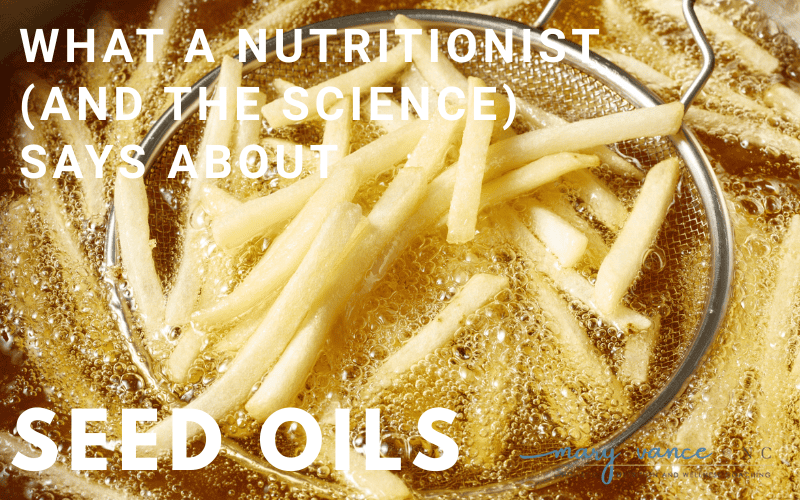
Vegetable oil is a refined food that is heavily processed with solvents and chemicals to deodorize it. It goes rancid easily and is high in the omega 6 fatty acids that may contribute to inflammation. Vegetable oil is not a health food and should not be a staple in your diet.
Why Vegetable Oil is Not Healthy
We’ve been fed so much misinformation about fats and oils that everyone is understandably confused.
I think one of the biggest nutrition myths of our time is the great debate about fats: which are healthy and which are harmful. We learned from the USDA and the American Heart Association that saturated fat is bad and vegetable oils high in polyunsaturated fatty acids (PUFAs) are good, heart healthy even, because they contain little to no saturated fat. We need to consume more of these PUFAs to lower cholesterol and prevent heart disease, says the AHA (and says your doctor who took one class in nutrition 25 years ago).
But what if it’s all a big fat lie? What if the very foods we’ve been told to eat to prevent disease are actually the culprits behind inflammation, obesity, heart disease, and diabetes? I wrote here about which fats to use and which to ditch, and which are best for high temperature cooking/frying, so read this post for more background info. Now, I want to touch on why vegetable oils are unhealthy and which fats you should be using.
Vegetable oil is not a Health Food
Remember that studies on nutrition and human health are always evolving. We’ve been told eggs will kill us; red meat causes cancer; no red meat is fine now. I deal with understandably confused folks daily.
Go into your kitchen. Look in your pantry. Do you have a jug of vegetable oil? You probably use it in cooking/baking because it’s been deodorized and doesn’t impart any flavor or smell into your food. Guess what? That’s not normal. We’re accustomed to using oils that have been so highly chemically processed and deodorized that they smell nothing like the plant or seed from which they came. Remember that oils should smell like their source: Unrefined coconut oils smell like coconut, right? Olive oil has a grassy, fruity smell like olives.
Back to your pantry. Does you jug of vegetable oil contain soybean, corn, or cottonseed oil? Toss it, please. Dump your canola oil. Get rid of the sunflower and safflower oils. And for goodness sake, chuck the fake butter spreads like I Can’t Believe It’s Not Butter. You’ve been told these “heart healthy” oils are good because they are low in saturated fat.
Curiously enough, the science behind the claims that a diet low in saturated fat prevents heart disease is sketchy. The famous Framingham heart study proved that the more saturated fat (from natural sources) one ate, the lower the serum cholesterol. Probably because the participants ate natural forms of unprocessed fat like animal fats or butter, though they likely cared about other aspects of their diets too, like including more plants and unprocessed foods. Also, of the people who have heart attacks, only about TWENTY FIVE PERCENT have elevated blood cholesterol levels. Click here for the source/study.
It is important to note that a higher saturated fat diet may drive up “bad” cholesterol and inflammatory markers in certain people who don’t metabolize fats well. Each person’s physiology is different, and we all have different macronutrient requirements.
Please understand that the recommendations about using PUFAs may be incorrect and that vegetable oils may actually contribute to the inflammation that they are said to prevent. Why? Because they have been highly chemically processed and need solvents to be extracted (it takes a lot of pressure to get oil out of corn or a grapeseed) and deodorized, and PUFAs are very sensitive to light, heat, and air due to their unstable molecular structure. Rancidity happens when they are heated and exposed to light. When you eat rancid oils, they create free radical damage and inflammation in your body.
Many of these oils come from poor quality GM foods, corn and soy being among the most GM crops. Canola comes from the high erucic acid (shown to cause heart lesions) containing rapeseed plant and has been cross-bred to increase its monounsaturated fatty acid content. It is highly refined and contains very delicate omega 3s that are heat sensitive and go rancid when heated. Not to mention that these vegetable oils are all high in the potentially inflammatory omega 6 fatty acids. We should have about 1:1 omega 3:6 for optimal health, but most are around an astounding 1:22. Too much omega 6 is associated with increased inflammation and cardiovascular risk. PubMed says so.
Conditions of inflammation associated with high omega 6 consumption
- cardiovascular disease
- diabetes
- obesity
- inflammatory intestinal issues
- asthma
- cancer
- autoimmune diseases
- high blood pressure
- infertility
- weight gain
We’re on a quest to eat real food, right? Unprocessed, as close to its natural form as possible? Although all oils must go through some sort of an extraction process, you can choose to buy minimally processed, unrefined (meaning no chemical hexane extraction or deodorization process) virgin oils as close to their natural states as possible. The more saturated they are, the more stable they’ll be at high temperatures. All plants contain toxins. Saturated fats such as coconut oil and animal fats are very low in toxins (provided the animal source from which it came wasn’t factory farm raised).
What to Eliminate
- canola oil
- margarine and “spreads”
- corn oil
- soybean oil
- all vegetable oils
- grapeseed oil (probably ok to use very occasionally, but not really recommended)
- sun- and safflower oils
- crisco
What to Eat
SATURATED FATS: have a high smoke point. For high temp cooking/sauteeing, use coconut oil, butter or ghee, tallow (beef fat), lard (pork fat), duck fat, palm oil, bacon fat (if from good quality, organic bacon. Be aware that toxins are stored in fat tissue, so get the highest quality animal fats you can find!). Fats have a spectrum of nutrients too, so vary the fats you eat. Let’s take a look:
Coconut oil: great source of immune boosting, anti-microbial lauric acid and a source of energy and metabolism-boosting medium chain fatty acids
Butter/ghee: short chain fatty acids/butyric acid is good for the gut
Palm oil: high in vitamin A! Source from Tropical Traditions only, as it’s sustainable.
Animal fats: part of a traditional diet & totally unprocessed (just have to be rendered).
Macadamia Nut oil has a high smoke point and is good for frying.
BOTTOM LINE: The saturated fats are good for cooking/searing and can be used liberally. Necessary for brain, hormonal, cellular health, energy & satiety. Note, however, that increasing saturated fats if you are consuming too many carbs can drive up inflammation.
MONOUNSATURATED FATS (high in omega 6 & 9): are slightly less stable at high temps but still healthful properties and can be used for medium-temp cooking and to dress salads, veggies, etc. Avocado and avocado oil, extra virgin olive oil, peanut oil (use sparingly), sesame oil. Have a lower smoke point, so don’t use for high heat cooking.
BOTTOM LINE: don’t make these fats the staple of your cooking oil/fat intake, but ok to use regularly.
POLYUNSATURATED FATS (high in omega 6 & 3): in oil form, these manmade fats are very unstable under heat and prone to oxidative damage. Do you want that in your body? Although they typically contain omega 3, the processing and refining methods make them unhealthy, and heating makes them rancid and destroys the delicate omega 3s. Contain significantly more plant toxins than other fats. PUFA oils are corn oil, safflower oil, soybean oil, sunflower oil, cottonseed oil, margarines made with high PUFA oils. Note that in food, we need the essential omega 3s in the form of walnuts, salmon, sardines, grass fed beef, leafy greens, chia seeds.
BOTTOM LINE: we need omega 3s, best to get in unprocessed natural food form. Avoid these oils. The exception is flaxseed oil, which can be a good plant source of omega 3s and isn’t highly refined.
Conclusion
We need a variety of fats to be healthy, a mix of poly, mono, and saturated. I rely on olive oil, butter, and coconut oil most often. I also enjoy nuts and avocado. I get my polyunsaturated omega 3-rich fats from wild salmon. You can’t truly know what ratios of fats are best for you without a DNA test. Some people do very well on high saturated fat diets while too much saturated fat in another person may cause inflammation and weight gain. Some people do very well focusing mostly on the mono and polyunsaturated fats. If you’re not sure, a good rule of thumb is to use a mix of all these fats without relying predominantly on one or the other.
Resources
How to Choose the Best Olive Oil
 Welcome to my site! I am a holistic nutrition consultant based in California, though I work with clients all over the world. I love houseplants, dogs, snow sports, and music that doesn't suck.