
Diverticulitis stems from inflammation, constipation and low fiber diets. Use phased gut healing, anti inflammatory foods, probiotics and stress reduction to restore colon health!!
Diverticulitis and diverticulosis are conditions of the large intestine (colon) that typically result from poor diet, low fiber intake, too much processed meat, stress, and/or weak connective tissue. It also may be a genetic issue. Diverticulosis results from the development of pouches (diverticula) in the colon wall. This alone may or may not produce immediate symptoms, but diverticulitis (-itis always refers to an inflammatory condition) occurs when one or more of these pouches become inflamed or infected due to a food particle or other matter lodged in the pouch. Inflammation plays a role in the development of diverticular disease. (source)
Diverticulitis can be really painful, often causing extreme discomfort on the lower left side of the abdomen. It may also cause nausea, vomiting and other fever-like conditions. Diverticulitis often sends folks to the hospital, and after diagnosis, home with antibiotics and a “low residue” diet, i.e. no small particles, like popcorn or seeds, that may become lodged in the pouches. Surgery may be required.
Many of my diverticulitis clients have stories that go like this: One day out of the blue they began to experience extreme abdominal pain that sent them to the ER. After testing and assessment, they’re told they had a diverticulitis attack and that they have diverticulosis. Some are told they’ll need surgery. They’re often very scared and shocked that this could happen and want to know why.
Although diet plays a huge role in inflammatory bowel disease, genetics and lifestyle play a huge role in the manifestation of diverticulitis also. In the case of diverticulitis, chronic constipation is a huge trigger, and an underlying connective tissue disorder may predispose to formation of intestinal diverticula.
Who Gets Diverticulitis?
Both diverticulitis and diverticulosis occur most often in older people who had a lifelong low fiber intake and overall heavily processed or poor diet, and/or who suffer from constipation. People are more likely to develop diverticulosis and diverticulitis as they age. A whopping 65% of people over 65 years of age may have diverticulosis, and many don’t know it. Of patients with diverticula, 80-85% remain asymptomatic. (source) Diverticulitis affects 10-25% of patients with diverticula.
The disease is common in the US, Britain, Australia, Canada, and is uncommon in Asia and Africa. Why? Because people in Asia & Africa have higher fiber diets and tend to consume more whole foods and fewer refined foods. Asia and Africa are both cold spots for colon cancer and other digestive disorders. In North America, we love our processed junk foods, meaning lower fiber, higher sugar, and higher risk of diseases associated directly with diet: diabetes, heart disease, colon cancer. Are we making the connection that what we eat dictates our overall health status?
The conventional approach is to eat more fiber. Sure, eating more fiber is great for digestion and gut health, but adding fiber and tons of veggies right away can cause more pain and result in painful constipation. So don’t go out just yet and buy psyllium to add to your green juice.
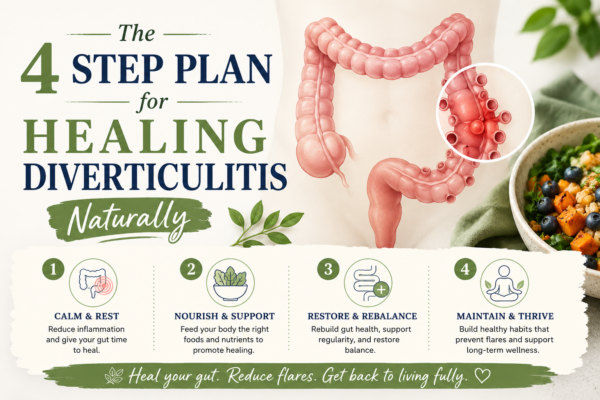
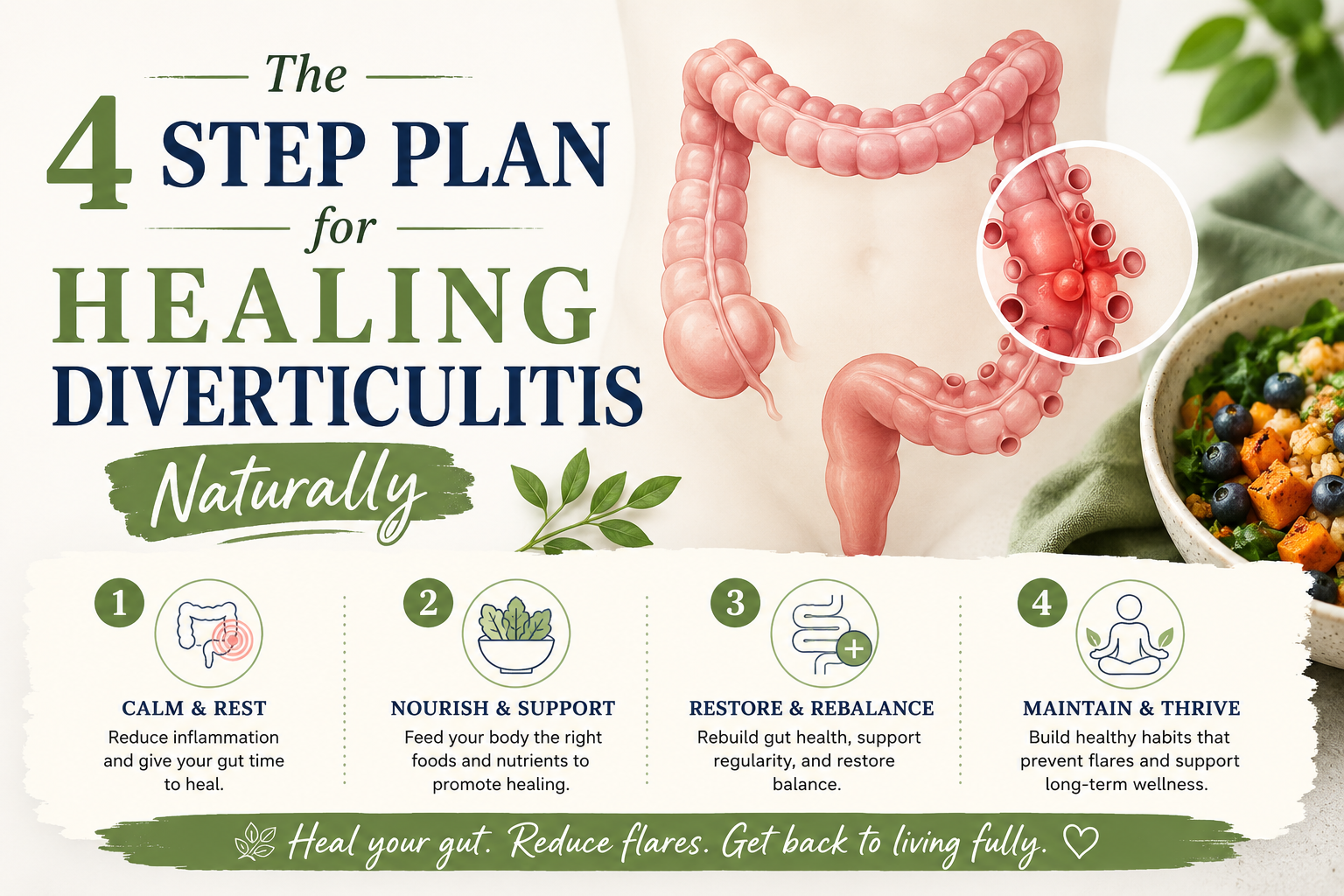
Healing Diverticulitis Naturally
If you’re in an active flare, I recommend a three phase diet to get back on track. Phase one is a clear liquid bone broth diet for about 7 days. You can consume bone broths, clear fresh juices, and ginger tea which soothes the GI tract. In phase two you can add cooked fruits and vegetables, light proteins like chicken & fish + gut healing soup like this. In phase three, slowly begin to increase fiber and diversify your diet by including more fruits & veggies. Slowly introduce legumes and grains like rice, oats, quinoa. You’ll need to be on a fiber support supplement long term. I recommend this one.
Long term, your goal is to maintain regular bowel movements and reduce intestinal inflammation. Diverticulitis is an inflammatory condition, so consume an anti-inflammatory diet like this. Eliminate inflammatory foods: sugar, alcohol, gluten (the protein in wheat, rye, barley), corn, and dairy. Also exclude any foods that cause you bloating or indigestion.
Your diet should include the following:
- free range meats such as chicken, grass fed beef or buffalo, lamb; wild fish; organic eggs; organ meats if you like them! They’re very nourishing. Focus especially on the omega3-rich proteins such as wild salmon, cod, and sardines. Note that too much red meat can be inflammatory for certain people, and some may fare better on a pescatarian-type Mediterranean diet with seafood, legumes, and veggies.
- plenty of good fats with lots of omega 3 fatty acids to reduce inflammation (consider a supplement), olive oil, coconut oil, butter (a great healing fat, believe it or not), walnut oil, avocado
- some starchy veggies: think below ground vegetables such as yams, red potatoes, beets, carrots, other root veggies. NOTE: some people with damaged small and/or large intestines cannot handle starches until the gut begins to heal.
- unlimited non-starchy veggies: think above ground crunchy vegetables such as cucumbers; leafy greens like spinach, kale, chard; celery; cruciferous: broccoli, cauliflower, cabbage, kale, etc; plenty of alliums, especially garlic.
- pay particular mind to including plenty of anti-inflammatory foods like wild salmon, sardines, blueberries, green tea, curcumin, leafy greens, pomegranate. I always recommend a curcumin supplement to diverticulitis sufferers (see below).
- gut healing superfoods such as bone broth and collagen
- increase vitamin C-rich foods to support connective tissue: strawberries, kiwi, broccoli, red pepper, citrus are among the highest. Collagen is great for tissue support also.
- polyphenol-rich foods for gut health: olives, pomegranate, cranberry, green tea, dark chocolate
- If you have a lot of gas and bloating, you may want to consider a low FODMAP diet until your gut heals.
Note that you will need to increase fiber-rich foods gradually, as too much fiber can irritate a healing gut and actually worsen constipation. Consider my gut reset healing soup (click here) and plan if you’re in a flare or newly diagnosed.
Many of my clients with inflammatory GI conditions fare well on a paleo type plan during healing. You are cutting out all processed, refined foods, and lectin-rich foods such as legumes and grains that may be difficult to digest. You’ll get plenty of fiber and good fats to reduce inflammation and to make sure you’re pooping every day. Pooping EVERY DAY is vital to prevent diverticulitis flares. (Read here how to overcome constipation). Then, transition to a Mediterranean type diet longterm. It’s great for inflammation and longevity.
You’ll drink plenty of herbal teas and green teas. While you’re healing, consider finding these soothing herbs to make a tea to reduce the inflammation: marshmallow root, chamomile, aloe vera (not an herb but you can drink the juice), cat’s claw, slippery elm, peppermint. Try taking around 10 grams of glutamine per day to help heal the intestinal wall. Try this glutamine. I recommend it alongside this gut healing support product that contains nutrients to help heal the intestinal wall.
Also take a probiotic supplement to build up the good bacteria in the gut and foster regularity. I recommend a short course of this high potency probiotic followed by an all-around good probiotic like this.
Supplement protocol for diverticulitis
- GI Revive to heal the gut wall
- Glutamine, 10-25 grams per day
- Probiotic
- Curcumin twice daily
- Magnesium if needed to ease constipation, start at 400mg and work up from there
- Colostrum is also very healing for the gut wall
- Butyrate is also excellent for IBD conditions
You’ll also want to consult with a digestive health practitioner to run a stool test to check for pathogenic bacteria, dysbiosis, yeast, and parasites, all of which can be triggers for diverticulitis. This is a simple take home test where you’ll collect and send off stool samples for testing (sounds as glamorous as it is). I recommend the GI MAP test, which you can order yourself here. Then, depending on what your results show, you can address any dysbiosis or bad bacteria that can adversely affect gut health. This will dramatically reduce inflammation and leaky gut and allow your intestinal wall to fully heal.
You may also want to consider a general gut healing program like my gut reset.
Finally, you’ll want to address any lifestyle habits that may have contributed to your flare. I sound like a broken record with this, but reducing stress is so crucial for any inflammatory condition. Stress causes an increase in cortisol and worsens inflammation. Even a practice as simple of 5 minutes of breathing exercise can balance your nervous system. Consider earthing for stress reduction (read about it here; it’s not just a hippy dippy practice).
Pay attention to sleep hygiene which also reduces stress on the body. Get movement daily. Get outside. Stay well hydrated to lubricate the bowel.
Conclusion
Diverticulitis is the acute infection of diverticula that form in the large intestine. You can manage diverticular disease with an anti-inflammatory diet, stress management, and by fixing motility issues. If you have a flare, start with a gut reset, then work to balance your microbiome by building up good flora and knocking back any dysbiosis. Long term, include plenty of gut healing foods and supplemental support to heal the colon wall. The key is to determine that triggers flares (typically stress and diet, but we don’t actually know in many cases).
Want Even More Support? The 21 Day Gut Reset is for YOU!
Please consider joining my 21 day gut reset program. You can join at any time, as it’s a self-paced e-course. All you need is a little motivation and an email address to join! Check out everything you’ll get:
- get rid of bloating, constipation, heartburn, gas, and indigestion
- have more energy, better focus, a flatter belly, glowing skin!
- receive a daily email for 21 days to help you heal your gut
- includes a 21 day meal plan: gluten, dairy, soy, refined sugar free
- 80+ easy & delicious gut healing recipes
- shopping list
- access to our private support group where you can ask questions and get even more info!
- a chart to help you build meals
- info on supplements you may need to enhance your journey
- Click here to join us!
 Welcome to my site! I am a holistic nutrition consultant based in California, though I work with clients all over the world. I love houseplants, dogs, snow sports, and music that doesn't suck.